Picture 1 of 1
Stock photo

Picture 1 of 1
Stock photo
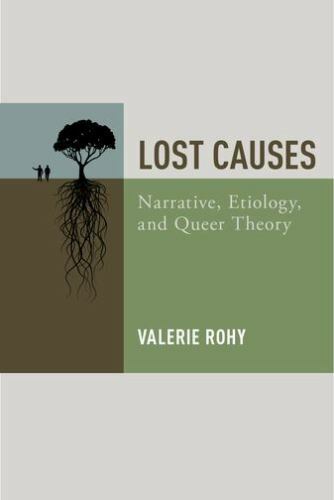
Lost Causes : Narrative, Etiology, and Queer Theory by Valerie Rohy (2014, Trade Paperback)

Rarewaves (695980)
98.9% positive feedback
Price:
US $56.89
ApproximatelyRM 233.94
+ $3.99 shipping
Returns:
60 days return. Buyer pays for return shipping. If you use an eBay shipping label, it will be deducted from your refund amount.
Condition:
Oops! Looks like we're having trouble connecting to our server.
Refresh your browser window to try again.
About this product
Product Identifiers
PublisherOxford University Press, Incorporated
ISBN-10019934020X
ISBN-139780199340200
eBay Product ID (ePID)28038284176
Product Key Features
Number of Pages240 Pages
Publication NameLost Causes : Narrative, Etiology, and Queer Theory
LanguageEnglish
SubjectLgbt Studies / General, Rhetoric, American / General, LGBT, European / English, Irish, Scottish, Welsh
Publication Year2014
TypeTextbook
Subject AreaLiterary Criticism, Social Science, Language Arts & Disciplines
AuthorValerie Rohy
FormatTrade Paperback
Dimensions
Item Height0.6 in
Item Weight21.2 Oz
Item Length8.5 in
Item Width5.5 in
Additional Product Features
Intended AudienceScholarly & Professional
LCCN2014-005144
Reviews"Belief in causality's legibility is a cause well lost for Valerie Rohy. Her provocative new book, Lost Causes, brings out the queer contingency of things and brilliantly examines the effects-at once social, political, and interpretative-of living with indeterminacy. The result should cause all to take note."-Lee Edelman, author of No Future: Queer Theory and the Death Drive "In Lost Causes, Valerie Rohy brilliantly deconstructs a long tradition of gay etiology, not to ask the usual illogical questions about the causes of homosexuality, but to ask why we ask and how we ask. She offers us a refreshing new way to read those great novels of gay origins-all those pictures of Dorian Gray and those wells of loneliness, which are more elusive than we often think."-Ellis Hanson, author of Out Takes: Essays on Queer Theory and Film "...There is no doubt that Lost Causes will find enthusiastic readers among literary scholars and queer theorists." -- Jana Funke, University of Exeter, "Belief in causality's legibility is a cause well lost for Valerie Rohy. Her provocative new book, Lost Causes, brings out the queer contingency of things and brilliantly examines the effects-at once social, political, and interpretative-of living with indeterminacy. The result should cause all to take note."-Lee Edelman, author of No Future: Queer Theory and the Death Drive"In Lost Causes, Valerie Rohy brilliantly deconstructs a long tradition of gay etiology, not to ask the usual illogical questions about the causes of homosexuality, but to ask why we ask and how we ask. She offers us a refreshing new way to read those great novels of gay origins-all those pictures of Dorian Gray and those wells of loneliness, which are more elusive than we often think."-Ellis Hanson, author of Out Takes: Essays on Queer Theory and Film "...There is no doubt that Lost Causes will find enthusiastic readers among literary scholars and queer theorists." -- Jana Funke, University of Exeter, "Belief in causality's legibility is a cause well lost for Valerie Rohy. Her provocative new book, Lost Causes, brings out the queer contingency of things and brilliantly examines the effects-at once social, political, and interpretative-of living with indeterminacy. The result should cause all to take note."-Lee Edelman, author of No Future: Queer Theory and the Death Drive "In Lost Causes, Valerie Rohy brilliantly deconstructs a long tradition of gay etiology, not to ask the usual illogical questions about the causes of homosexuality, but to ask why we ask and how we ask. She offers us a refreshing new way to read those great novels of gay origins-all those pictures of Dorian Gray and those wells of loneliness, which are more elusive than we often think."-Ellis Hanson, author of Out Takes: Essays on Queer Theory and Film, "Belief in causality's legibility is a cause well lost for Valerie Rohy. Her provocative new book, Lost Causes, brings out the queer contingency of things and brilliantly examines the effects-at once social, political, and interpretative-of living with indeterminacy. The result should cause all to take note."-Lee Edelman, author of No Future: Queer Theory and the Death Drive"In Lost Causes, Valerie Rohy brilliantly deconstructs a long tradition of gay etiology, not to ask the usual illogical questions about the causes of homosexuality, but to ask why we ask and how we ask. She offers us a refreshing new way to read those great novels of gay origins-all those pictures of Dorian Gray and those wells of loneliness, which are more elusive than we often think."-Ellis Hanson, author of Out Takes: Essays on Queer Theory andFilm"...There is no doubt that Lost Causes will find enthusiastic readers among literary scholars and queer theorists." -- Jana Funke, University of Exeter
Dewey Edition23
Dewey Decimal809/.93352664
Table Of ContentAcknowledgments1. Introduction: Cause and Effect2. On Homosexual Reproduction3. Strange Influence: The Picture of Dorian Gray4. Return from the Future: James Weldon Johnson's Autobiography5. Desire and the Scene of Reading: The Well of Loneliness6. The Future in Ruins: Borrowed Time7. Contingency for Beginners: The Night Watch8. Conclusion: Multiply and DivideNotes
SynopsisLost Causes stages a polemical intervention in the discourse that grounds queer civil rights in etiology - that is, in the cause of homosexuality, whether choice, "recruitment," or biology. Reading etiology as a narrative form, political strategy, and hermeneutic method in American and British literature and popular culture, it argues that today's gay arguments for biological determinism accept their opponents' paranoia about what Rohy calls "homosexual reproduction"-that is, nonsexual forms of queer increase-preventing more complex ways of considering sexuality and causality. This study combines literary texts and psychoanalytic theory - two salient sources of etiological narratives in themselves - to reconsider phobic tropes of homosexual reproduction: contagion in Borrowed Time, bad influence in The Picture of Dorian Gray, trauma in The Night Watch, choice of identity in James Weldon Johnson's Autobiography of an Ex-Colored Man, and dangerous knowledge in The Well of Loneliness. These readings draw on Lacan's notion of retroactive causality to convert the question of what causes homosexuality into a question of what homosexuality causes as the constitutive outside of a heteronormative symbolic order. Ultimately, this study shows, queer communities and queer theory must embrace formerly shaming terms - why should the increase of homosexuality be unthinkable? - while retaining the critical sense of queerness as a non-identity, a permanent negativity., Causality dominates today's discussions of LGBT rights: anti-gay voices imagine gay proliferation through seduction, influence, and corruption, while queer communities largely embrace biological determinism, saying they are "born gay." Reading popular rhetoric, psychoanalytic theory, and British and American literature from the late nineteenth century through the present day, Lost Causes decenters etiology from queer politics, engages abject tropes of "homosexual reproduction," and considers the effects of retroactive, absent, and contingent causality., Lost Causes stages a polemical intervention in the discourse that grounds queer civil rights in etiology -- that is, in the cause of homosexuality, whether choice, "recruitment," or biology., Lost Causes stages a polemical intervention in the discourse that grounds queer civil rights in etiology -- that is, in the cause of homosexuality, whether choice, "recruitment," or biology. Reading etiology as a narrative form, political strategy, and hermeneutic method in American and British literature and popular culture, it argues that today's gay arguments for biological determinism accept their opponents' paranoia about what Rohy calls "homosexual reproduction"-that is, nonsexual forms of queer increase-preventing more complex ways of considering sexuality and causality. This study combines literary texts and psychoanalytic theory--two salient sources of etiological narratives in themselves -- to reconsider phobic tropes of homosexual reproduction: contagion in Borrowed Time, bad influence in The Picture of Dorian Gray, trauma in The Night Watch, choice of identity in James Weldon Johnson's Autobiography of an Ex-Colored Man, and dangerous knowledge in The Well of Loneliness. These readings draw on Lacan's notion of retroactive causality to convert the question of what causes homosexuality into a question of what homosexuality causes as the constitutive outside of a heteronormative symbolic order. Ultimately, this study shows, queer communities and queer theory must embrace formerly shaming terms -- why should the increase of homosexuality be unthinkable? -- while retaining the critical sense of queerness as a non-identity, a permanent negativity.
LC Classification NumberPS169.H65R64 2015
Be the first to write a review


