Picture 1 of 5


Gallery
Picture 1 of 5


Have one to sell?
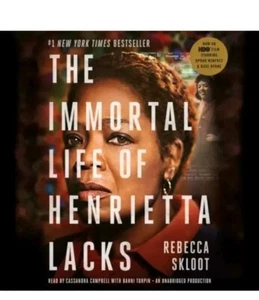
The Immortal Life of Henrietta Lacks
US $8.49
ApproximatelyRM 35.08
Condition:
Oops! Looks like we're having trouble connecting to our server.
Refresh your browser window to try again.
Shipping:
Free USPS Media MailTM.
Located in: Canton, Ohio, United States
Delivery:
Estimated between Thu, 4 Dec and Mon, 8 Dec to 94104
Returns:
30 days return. Buyer pays for return shipping. If you use an eBay shipping label, it will be deducted from your refund amount.
Coverage:
Read item description or contact seller for details. See all detailsSee all details on coverage
(Not eligible for eBay purchase protection programmes)
About this item
Seller assumes all responsibility for this listing.
eBay item number:355745271812
Item specifics
- Condition
- ISBN
- 9780451486318
About this product
Product Identifiers
Publisher
Penguin Random House Audio Publishing Group
ISBN-10
0451486315
ISBN-13
9780451486318
eBay Product ID (ePID)
219441569
Product Key Features
Book Title
Immortal Life of Henrietta Lacks
Topic
General, Women's Studies, Life Sciences / Biology, Science & Technology
Publication Year
2015
Language
English
Genre
Social Science, Science, Biography & Autobiography, Medical
Format
Compact Disc
Dimensions
Item Height
1.1 In.
Item Length
5.8 In.
Item Weight
9.2 Oz
Item Width
5.1 In.
Additional Product Features
Intended Audience
Trade
TitleLeading
The
Dewey Edition
22
Number of Volumes
10 vols.
Dewey Decimal
616.02774092
Edition Description
Unabridged edition
Synopsis
#1 NEW YORK TIMES BESTSELLER * "The story of modern medicine and bioethics--and, indeed, race relations--is refracted beautifully, and movingly."-- Entertainment Weekly NOW A MAJOR MOTION PICTURE FROM HBO® STARRING OPRAH WINFREY AND ROSE BYRNE * ONE OF THE "MOST INFLUENTIAL" (CNN), "DEFINING" ( LITHUB ), AND "BEST" ( THE PHILADELPHIA INQUIRER ) BOOKS OF THE DECADE * WINNER OF THE CHICAGO TRIBUNE HEARTLAND PRIZE FOR NONFICTION NAMED ONE OF THE BEST BOOKS OF THE YEAR BY The New York Times Book Review * Entertainment Weekly * O: The Oprah Magazine * NPR * Financial Times * New York * Independent (U.K.) * Times (U.K.) * Publishers Weekly * Library Journal * Kirkus Reviews * Booklist * Globe and Mail Her name was Henrietta Lacks, but scientists know her as HeLa. She was a poor Southern tobacco farmer who worked the same land as her slave ancestors, yet her cells--taken without her knowledge--became one of the most important tools in medicine: The first "immortal" human cells grown in culture, which are still alive today, though she has been dead for more than sixty years. HeLa cells were vital for developing the polio vaccine; uncovered secrets of cancer, viruses, and the atom bomb's effects; helped lead to important advances like in vitro fertilization, cloning, and gene mapping; and have been bought and sold by the billions. Yet Henrietta Lacks remains virtually unknown, buried in an unmarked grave. Henrietta's family did not learn of her "immortality" until more than twenty years after her death, when scientists investigating HeLa began using her husband and children in research without informed consent. And though the cells had launched a multimillion-dollar industry that sells human biological materials, her family never saw any of the profits. As Rebecca Skloot so brilliantly shows, the story of the Lacks family--past and present--is inextricably connected to the dark history of experimentation on African Americans, the birth of bioethics, and the legal battles over whether we control the stuff we are made of. Over the decade it took to uncover this story, Rebecca became enmeshed in the lives of the Lacks family--especially Henrietta's daughter Deborah. Deborah was consumed with questions: Had scientists cloned her mother? Had they killed her to harvest her cells? And if her mother was so important to medicine, why couldn't her children afford health insurance? Intimate in feeling, astonishing in scope, and impossible to put down, The Immortal Life of Henrietta Lacks captures the beauty and drama of scientific discovery, as well as its human consequences., #1 NEW YORK TIMES BESTSELLER * "The story of modern medicine and bioethics--and, indeed, race relations--is refracted beautifully, and movingly."-- Entertainment Weekly NOW A MAJOR MOTION PICTURE FROM HBO® STARRING OPRAH WINFREY AND ROSE BYRNE * ONE OF THE "MOST INFLUENTIAL" (CNN), "DEFINING" ( LITHUB ), AND "BEST" ( THE PHILADELPHIA INQUIRER ) BOOKS OF THE DECADE * ONE OF ESSENCE 'S 50 MOST IMPACTFUL BLACK BOOKS OF THE PAST 50 YEARS * WINNER OF THE CHICAGO TRIBUNE HEARTLAND PRIZE FOR NONFICTION NAMED ONE OF THE BEST BOOKS OF THE YEAR BY The New York Times Book Review * Entertainment Weekly * O: The Oprah Magazine * NPR * Financial Times * New York * Independent (U.K.) * Times (U.K.) * Publishers Weekly * Library Journal * Kirkus Reviews * Booklist * Globe and Mail Her name was Henrietta Lacks, but scientists know her as HeLa. She was a poor Southern tobacco farmer who worked the same land as her slave ancestors, yet her cells--taken without her knowledge--became one of the most important tools in medicine: The first "immortal" human cells grown in culture, which are still alive today, though she has been dead for more than sixty years. HeLa cells were vital for developing the polio vaccine; uncovered secrets of cancer, viruses, and the atom bomb's effects; helped lead to important advances like in vitro fertilization, cloning, and gene mapping; and have been bought and sold by the billions. Yet Henrietta Lacks remains virtually unknown, buried in an unmarked grave. Henrietta's family did not learn of her "immortality" until more than twenty years after her death, when scientists investigating HeLa began using her husband and children in research without informed consent. And though the cells had launched a multimillion-dollar industry that sells human biological materials, her family never saw any of the profits. As Rebecca Skloot so brilliantly shows, the story of the Lacks family--past and present--is inextricably connected to the dark history of experimentation on African Americans, the birth of bioethics, and the legal battles over whether we control the stuff we are made of. Over the decade it took to uncover this story, Rebecca became enmeshed in the lives of the Lacks family--especially Henrietta's daughter Deborah. Deborah was consumed with questions: Had scientists cloned her mother? Had they killed her to harvest her cells? And if her mother was so important to medicine, why couldn't her children afford health insurance? Intimate in feeling, astonishing in scope, and impossible to put down, The Immortal Life of Henrietta Lacks captures the beauty and drama of scientific discovery, as well as its human consequences., #1 NEW YORK TIMES BESTSELLER - "The story of modern medicine and bioethics--and, indeed, race relations--is refracted beautifully, and movingly."-- Entertainment Weekly NOW A MAJOR MOTION PICTURE FROM HBO(R) STARRING OPRAH WINFREY AND ROSE BYRNE - ONE OF THE "MOST INFLUENTIAL" (CNN), "DEFINING" ( LITHUB ), AND "BEST" ( THE PHILADELPHIA INQUIRER ) BOOKS OF THE DECADE - ONE OF ESSENCE 'S 50 MOST IMPACTFUL BLACK BOOKS OF THE PAST 50 YEARS - WINNER OF THE CHICAGO TRIBUNE HEARTLAND PRIZE FOR NONFICTION NAMED ONE OF THE BEST BOOKS OF THE YEAR BY The New York Times Book Review - Entertainment Weekly - O: The Oprah Magazine - NPR - Financial Times - New York - Independent (U.K.) - Times (U.K.) - Publishers Weekly - Library Journal - Kirkus Reviews - Booklist - Globe and Mail Her name was Henrietta Lacks, but scientists know her as HeLa. She was a poor Southern tobacco farmer who worked the same land as her slave ancestors, yet her cells--taken without her knowledge--became one of the most important tools in medicine: The first "immortal" human cells grown in culture, which are still alive today, though she has been dead for more than sixty years. HeLa cells were vital for developing the polio vaccine; uncovered secrets of cancer, viruses, and the atom bomb's effects; helped lead to important advances like in vitro fertilization, cloning, and gene mapping; and have been bought and sold by the billions. Yet Henrietta Lacks remains virtually unknown, buried in an unmarked grave. Henrietta's family did not learn of her "immortality" until more than twenty years after her death, when scientists investigating HeLa began using her husband and children in research without informed consent. And though the cells had launched a multimillion-dollar industry that sells human biological materials, her family never saw any of the profits. As Rebecca Skloot so brilliantly shows, the story of the Lacks family--past and present--is inextricably connected to the dark history of experimentation on African Americans, the birth of bioethics, and the legal battles over whether we control the stuff we are made of. Over the decade it took to uncover this story, Rebecca became enmeshed in the lives of the Lacks family--especially Henrietta's daughter Deborah. Deborah was consumed with questions: Had scientists cloned her mother? Had they killed her to harvest her cells? And if her mother was so important to medicine, why couldn't her children afford health insurance? Intimate in feeling, astonishing in scope, and impossible to put down, The Immortal Life of Henrietta Lacks captures the beauty and drama of scientific discovery, as well as its human consequences., Now a major motion picture from HBO(R) starring Oprah Winfrey and Rose Byrne. Her name was Henrietta Lacks, but scientists know her as HeLa. She was a poor Southern tobacco farmer who worked the same land as her slave ancestors, yet her cells--taken without her knowledge--became one of the most important tools in medicine. The first "immortal" human cells grown in culture, they are still alive today, though she has been dead for more than sixty years. If you could pile all HeLa cells ever grown onto a scale, they'd weigh more than 50 million metric tons--as much as a hundred Empire State Buildings. HeLa cells were vital for developing the polio vaccine; uncovered secrets of cancer, viruses, and the atom bomb's effects; helped lead to important advances like in vitro fertilization, cloning, and gene mapping; and have been bought and sold by the billions. Yet Henrietta Lacks remains virtually unknown, buried in an unmarked grave. Now Rebecca Skloot takes us on an extraordinary journey, from the "colored" ward of Johns Hopkins Hospital in the 1950s to stark white laboratories with freezers full of HeLa cells; from Henrietta's small, dying hometown of Clover, Virginia--a land of wooden slave quarters, faith healings, and voodoo--to East Baltimore today, where her children and grandchildren live and struggle with the legacy of her cells. Henrietta's family did not learn of her "immortality" until more than twenty years after her death, when scientists investigating HeLa began using her husband and children in research without informed consent. And though the cells had launched a multimillion-dollar industry that sells human biological materials, her family never saw any of the profits. As Rebecca Skloot so brilliantly shows, the story of the Lacks family--past and present--is inextricably connected to the dark history of experimentation on African Americans, the birth of bioethics, and the legal battles over whether we control the stuff we are made of. Over the decade it took to uncover this story, Rebecca became enmeshed in the lives of the Lacks family--especially Henrietta's daughter Deborah, who was devastated to learn about her mother's cells. She was consumed with questions: Had scientists cloned her mother? Did it hurt her when researchers infected her cells with viruses and shot them into space? What happened to her sister, Elsie, who died in a mental institution at the age of fifteen? And if her mother was so important to medicine, why couldn't her children afford health insurance? Intimate in feeling, astonishing in scope, and impossible to put down, The Immortal Life of Henrietta Lacks captures the beauty and drama of scientific discovery, as well as its human consequences.
Item description from the seller
Seller feedback (501)
- 9***g (4)- Feedback left by buyer.Past 6 monthsVerified purchaseItem came as described. Quick shipping and overall positive experience with seller.
- u***2 (211)- Feedback left by buyer.Past 6 monthsVerified purchaseShipping was quick value good as described
- i***t (1980)- Feedback left by buyer.Past 6 monthsVerified purchasePerfect transaction, fast shipping and seller communication perfect. Thank you!